Grass Seeding Tips- Cool Season Grasses
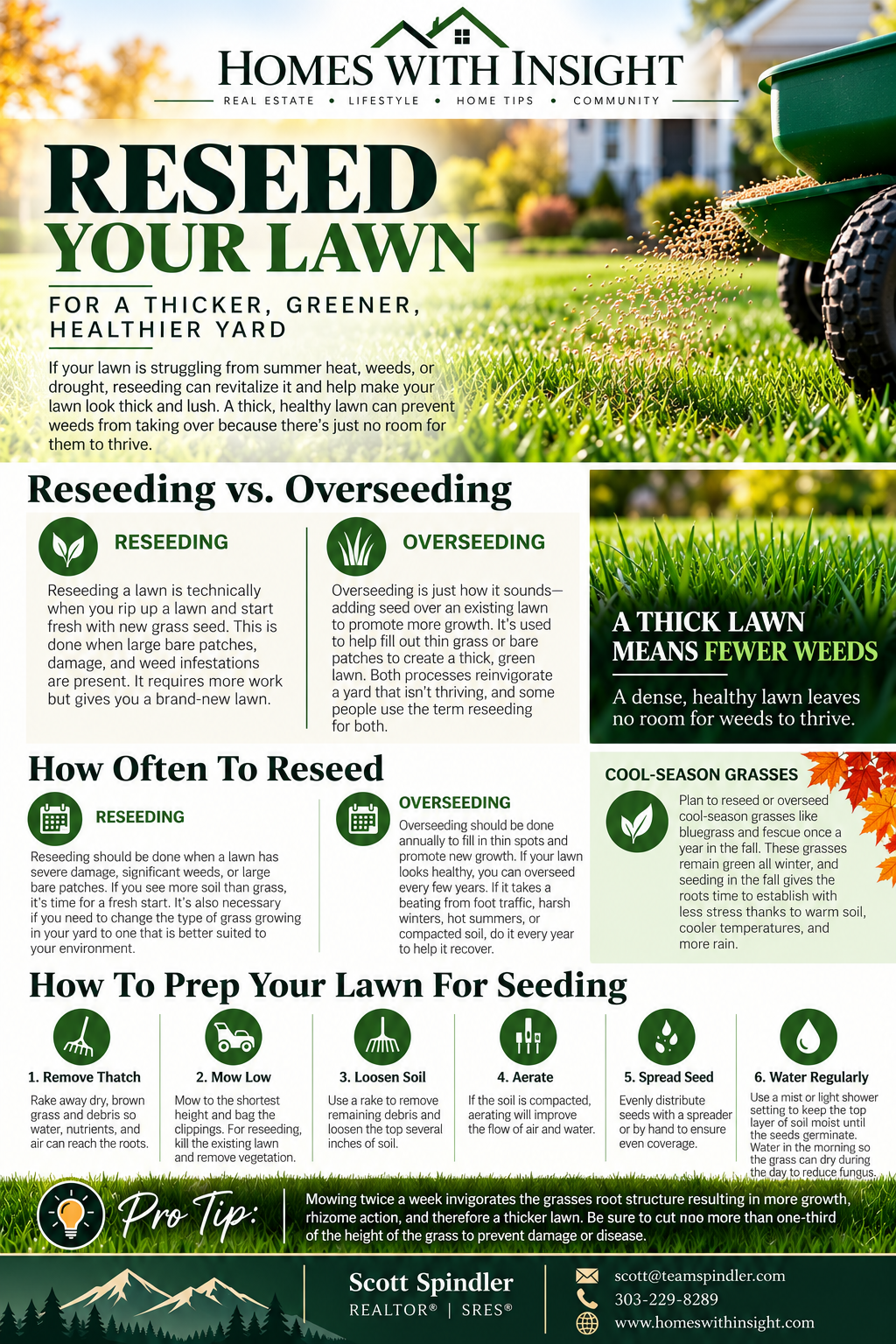
When to Seed Cool-Season Grass in Colorado: Tips for a Healthier Lawn
Maintaining a healthy, attractive lawn along Colorado's Front Range can be challenging. Between our dry climate, intense summer sunshine, fluctuating temperatures, and occasional watering restrictions, homeowners often struggle to keep their grass thick and green.
Fortunately, reseeding or overseeding your lawn can help restore thin or damaged areas, improve turf density, and create a healthier landscape.
Whether you live in Arvada, Westminster, Broomfield, Golden, or elsewhere in the Denver metro area, understanding when and how to seed cool-season grasses can make a significant difference.
When Is the Best Time to Seed Grass in Colorado?
For most established lawns containing cool-season grasses, late summer through early fall is generally the best time to overseed in Colorado.
Late August through September often provides favorable conditions, although the ideal timing depends on elevation, weather, and the approach of freezing temperatures.
During this period, soil temperatures are typically warm enough to encourage germination, while cooler air temperatures reduce stress on developing grass.
Spring seeding is another option, particularly when repairing winter damage. However, spring-planted grass may struggle to develop deep roots before summer heat arrives, and weed competition can be more challenging.
Choosing the Right Grass Seed
Most lawns throughout the Denver metropolitan area contain cool-season grasses, including:
-
Kentucky bluegrass: Popular for its attractive appearance and ability to spread and recover from minor damage, although it generally requires regular irrigation.
-
Turf-type tall fescue: Known for relatively deep roots and good drought tolerance once established.
-
Perennial ryegrass: Germinates relatively quickly and is often included in seed mixtures.
Choosing a grass variety suited to your property's sun exposure, irrigation capabilities, and existing turf is important for long-term success.
Five Tips for Successful Lawn Overseeding
1. Mow the existing lawn shorter than usual. Before overseeding, lower your mowing height moderately to help grass seed reach the soil. Avoid scalping the lawn.
2. Remove excess thatch and debris. Rake away accumulated leaves, dead grass, and other material that could prevent seed-to-soil contact.
3. Aerate compacted soil. Core aeration can improve soil conditions and create openings where grass seed can establish. For heavily compacted lawns, aeration may be particularly beneficial.
4. Apply seed evenly. Follow the manufacturer's recommended application rate. Excessive seed can create competition among developing grass plants.
5. Maintain consistent moisture. Newly planted seed needs frequent, light watering to keep the upper soil layer moist during germination. Gradually transition to deeper, less frequent watering as the grass becomes established, while following local watering restrictions.
Don't Forget About Colorado's Soil Conditions
Many properties along the Front Range have clay-heavy or compacted soils that can make lawn establishment more difficult.
A soil test can help identify nutrient deficiencies and determine whether fertilizer or soil amendments are appropriate. Avoid automatically adding large amounts of fertilizer without understanding what your lawn actually needs.
A Healthy Lawn Is Part of Good Home Maintenance
A well-maintained landscape contributes to a property's appearance and can make a positive first impression on prospective buyers.
Proper grading, drainage, and irrigation practices are equally important. Overwatering near a home's foundation can contribute to moisture-related concerns, while poorly directed sprinklers may damage exterior materials over time.
As a REALTOR® and SRES® with more than 20 years of home inspection experience, I encourage homeowners to think beyond appearance and consider how routine maintenance contributes to the long-term condition of their property.
Whether you're preparing to sell, purchasing a home, or simply maintaining your investment, a little preventative care can go a long way.
Scott Spindler, REALTOR® | SRES®
HomeSmart Realty | Homes With Insight
303-229-8289
scott@teamspindler.com
www.homeswithinsight.com
Categories
Recent Posts